Prosperity Within Limits? Planetary Habitability, Global Convergence and Structural Transformation, 2026–2100

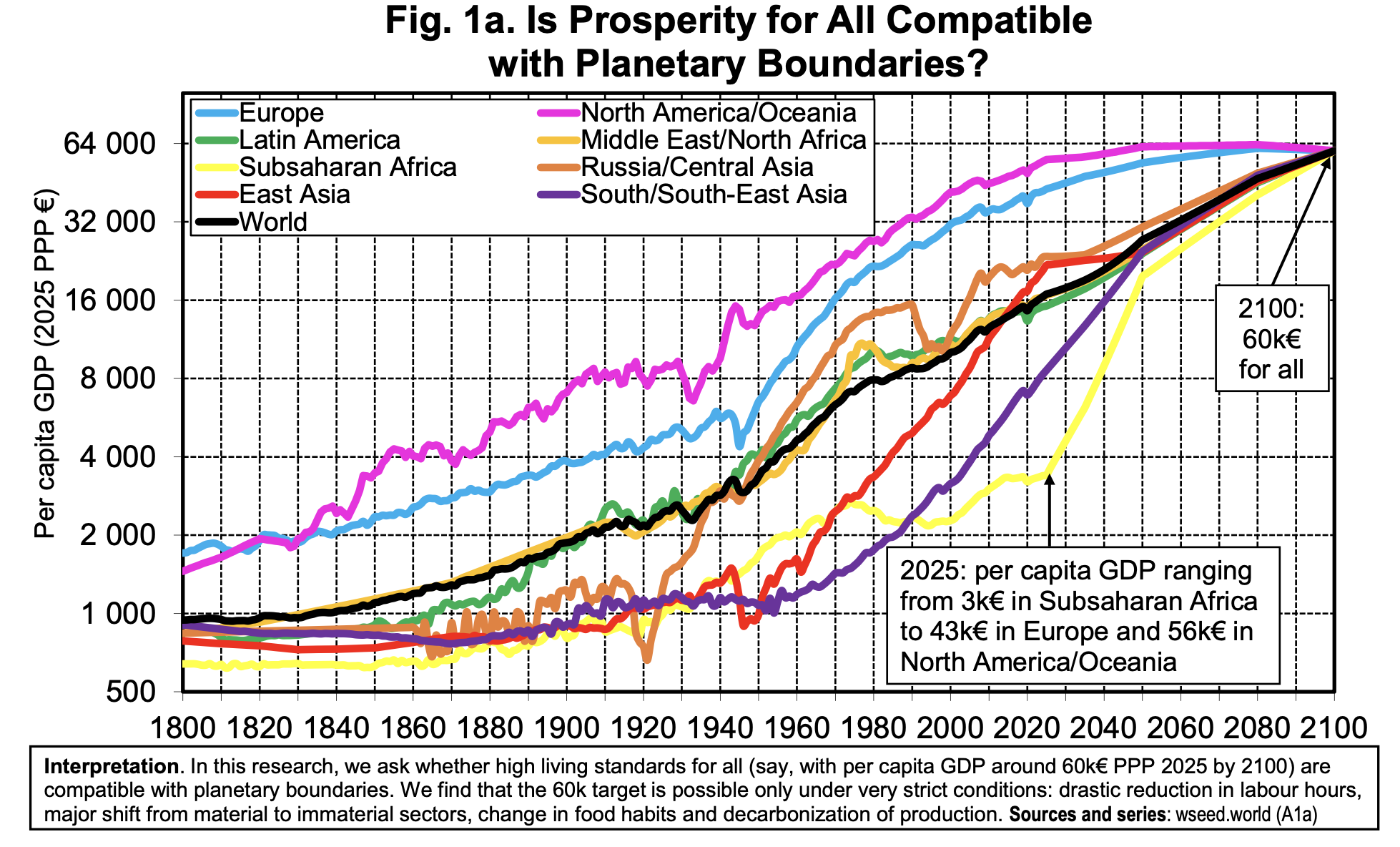
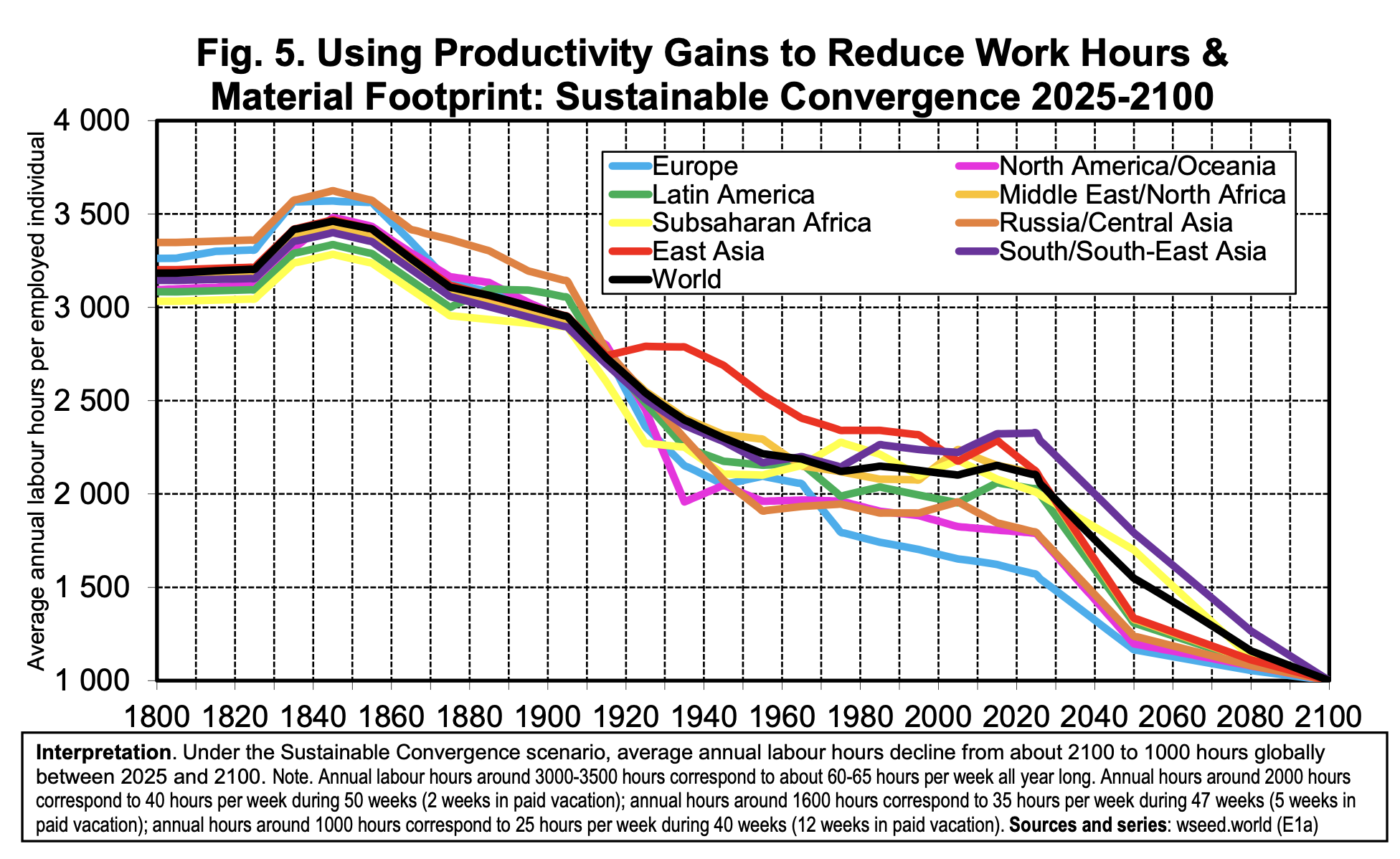
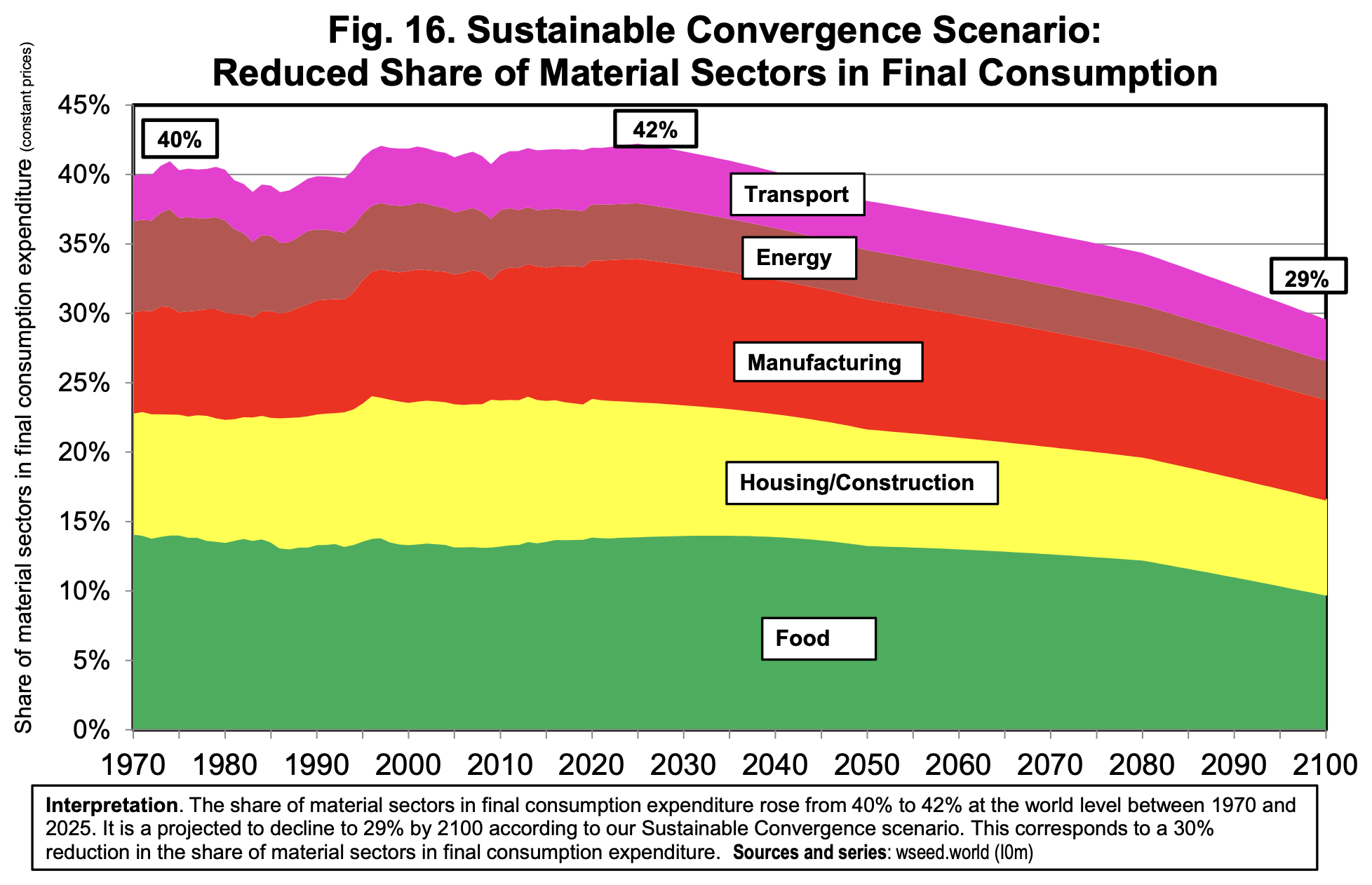
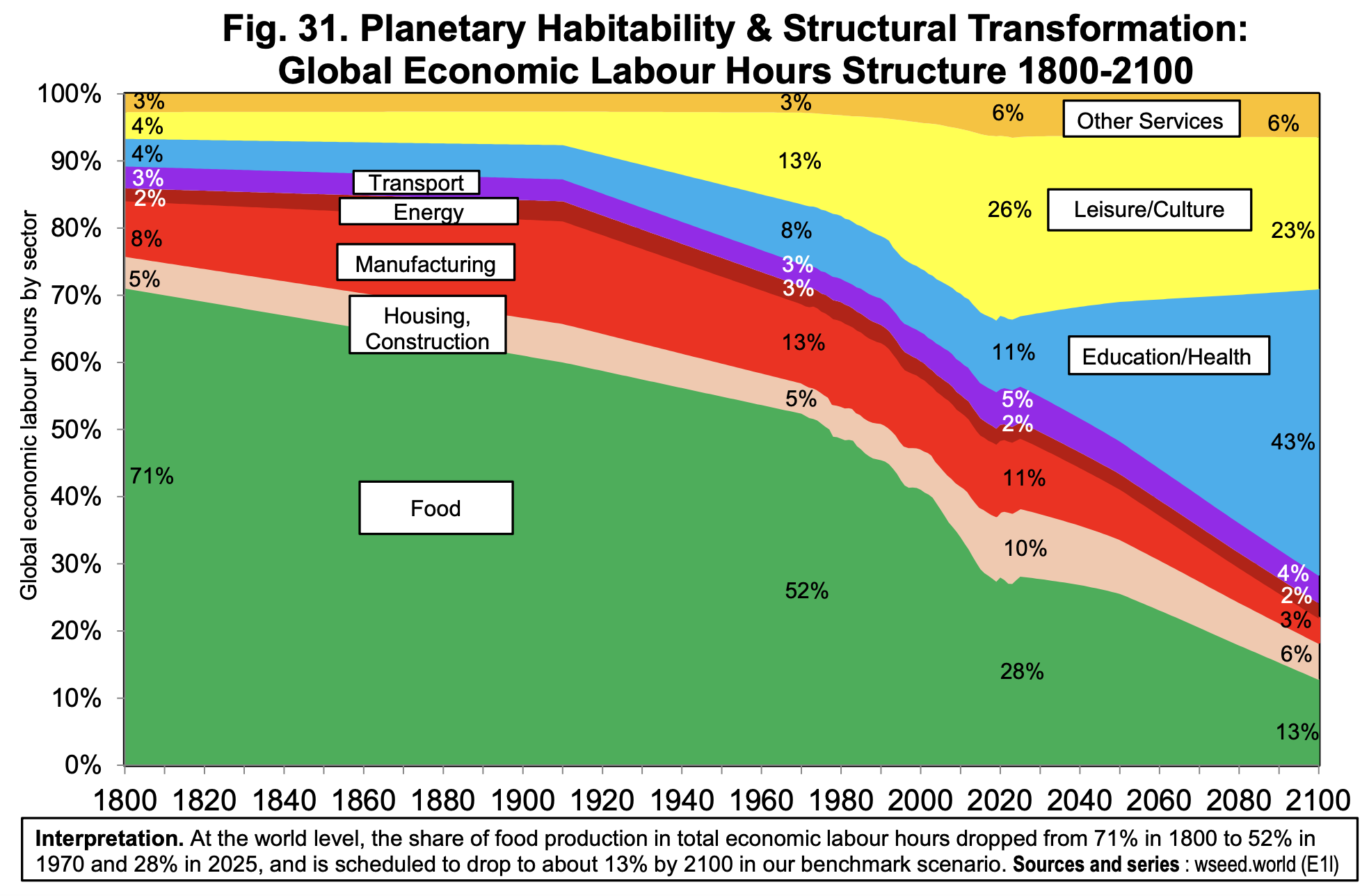
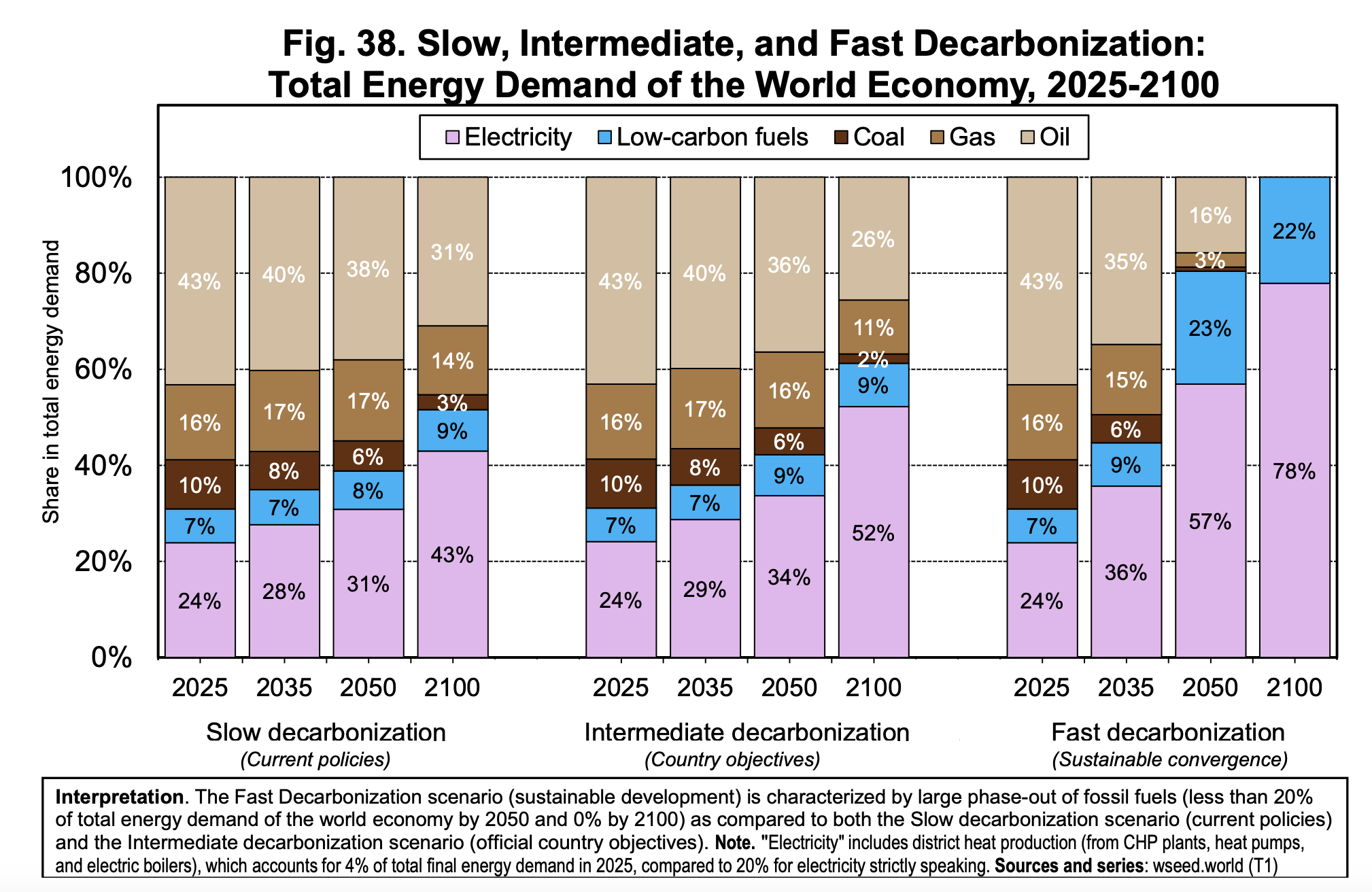
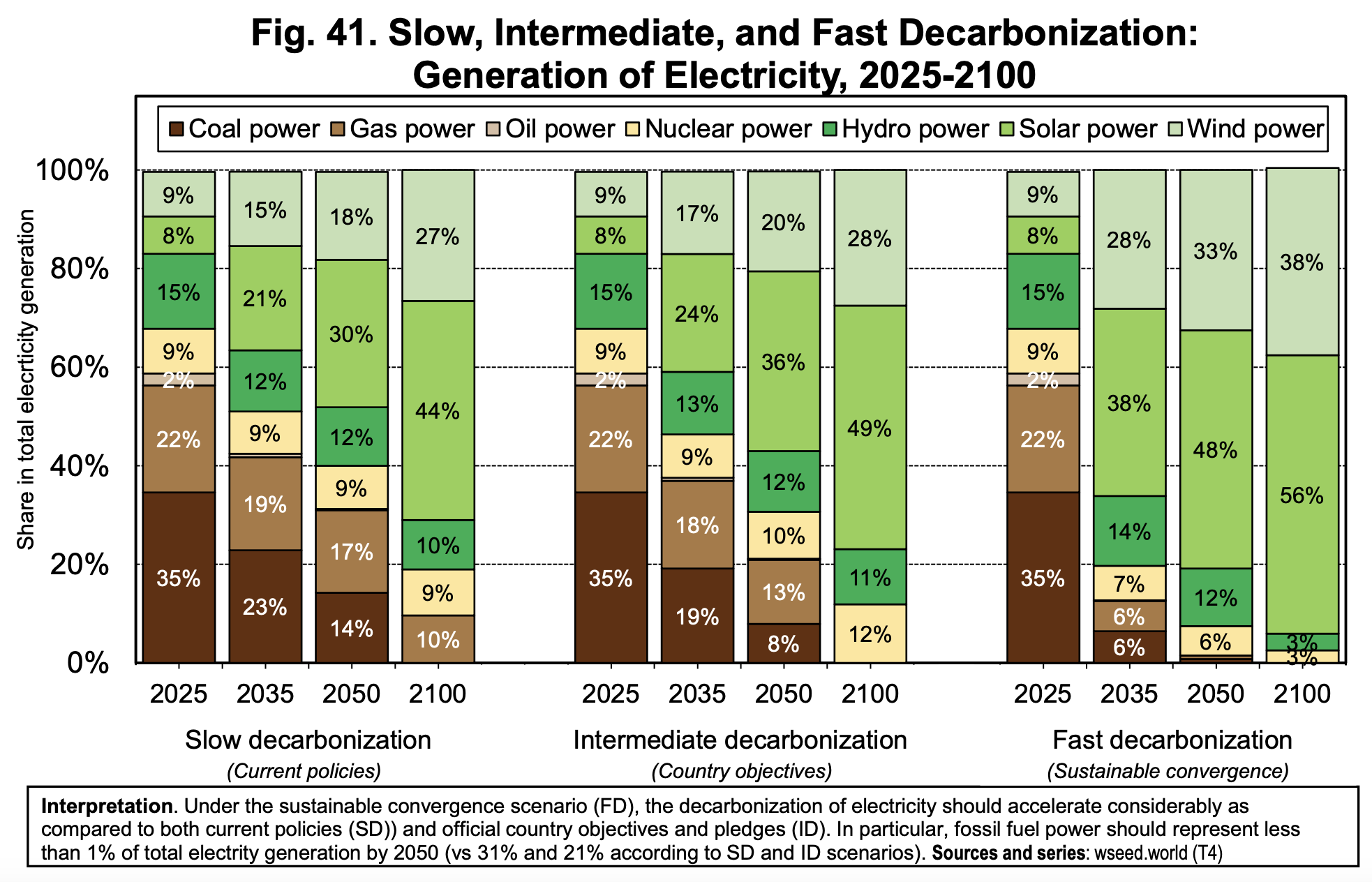
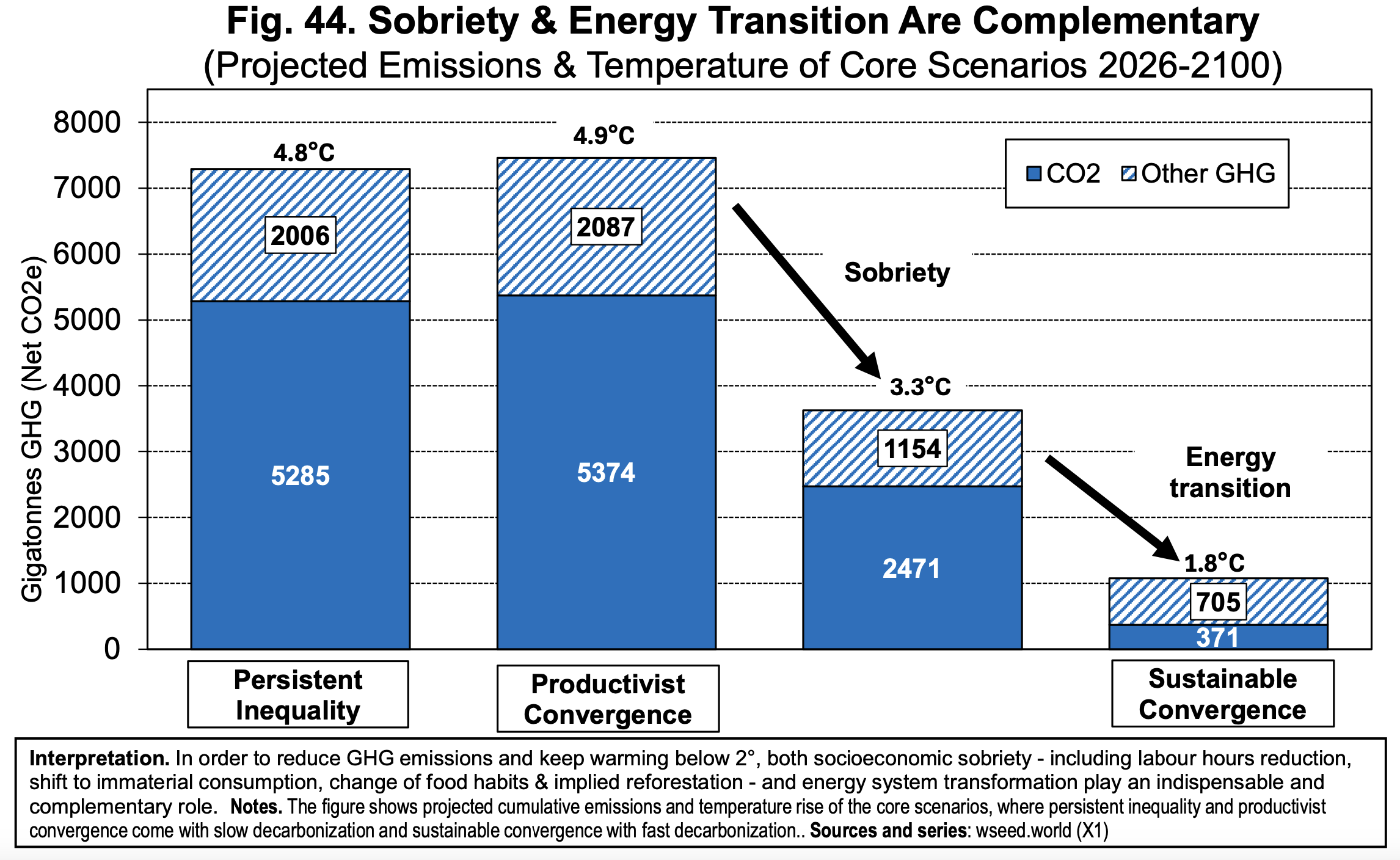
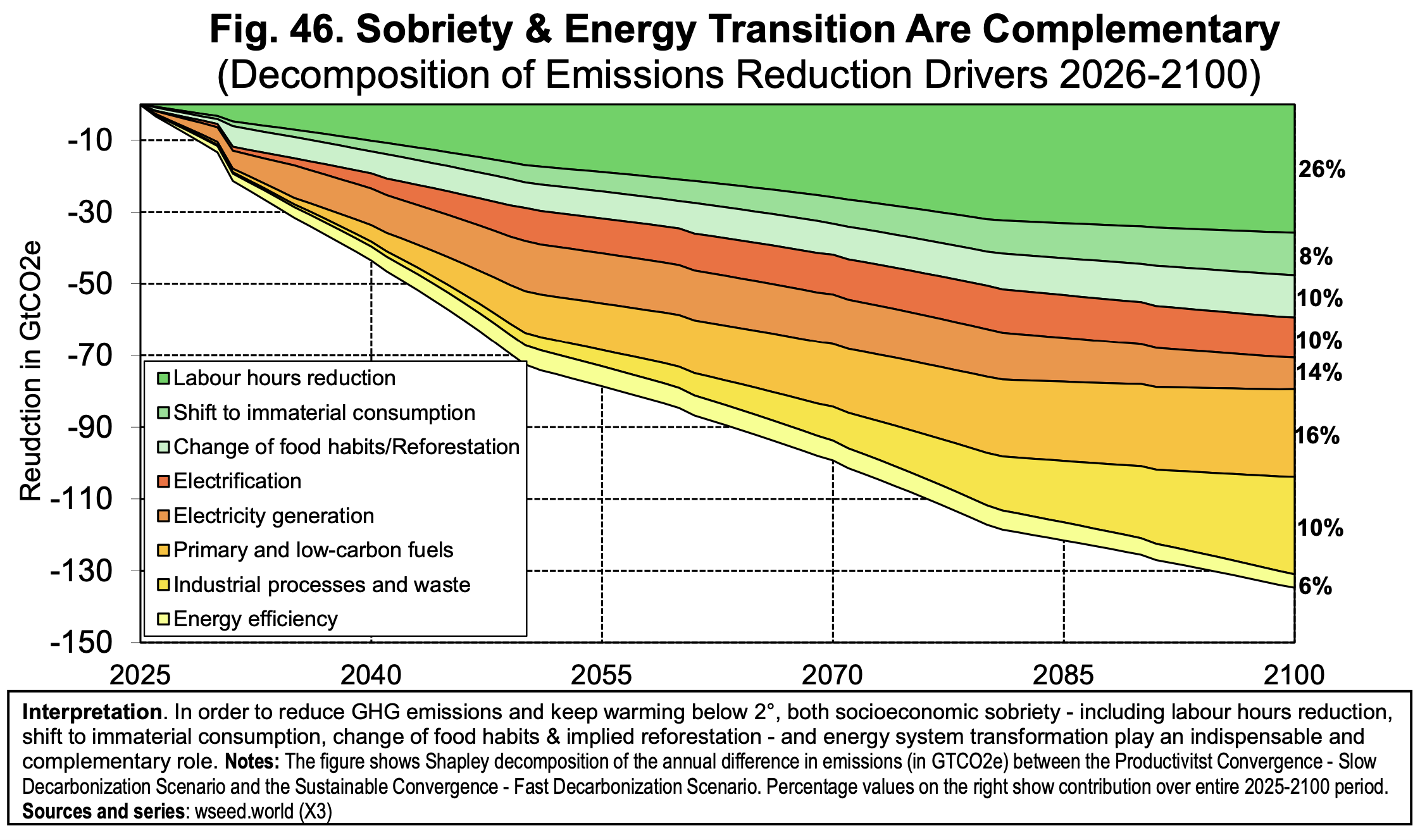
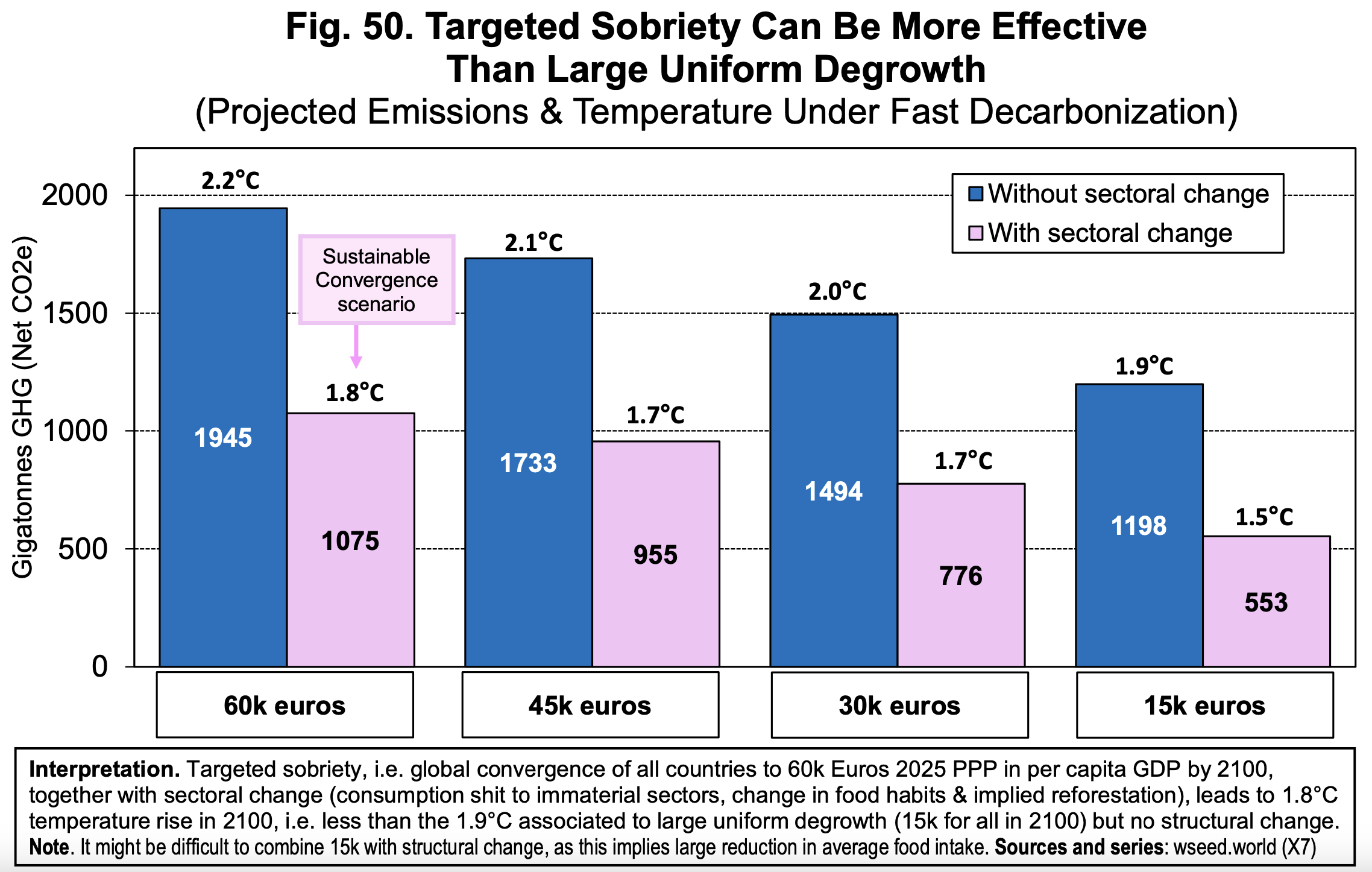
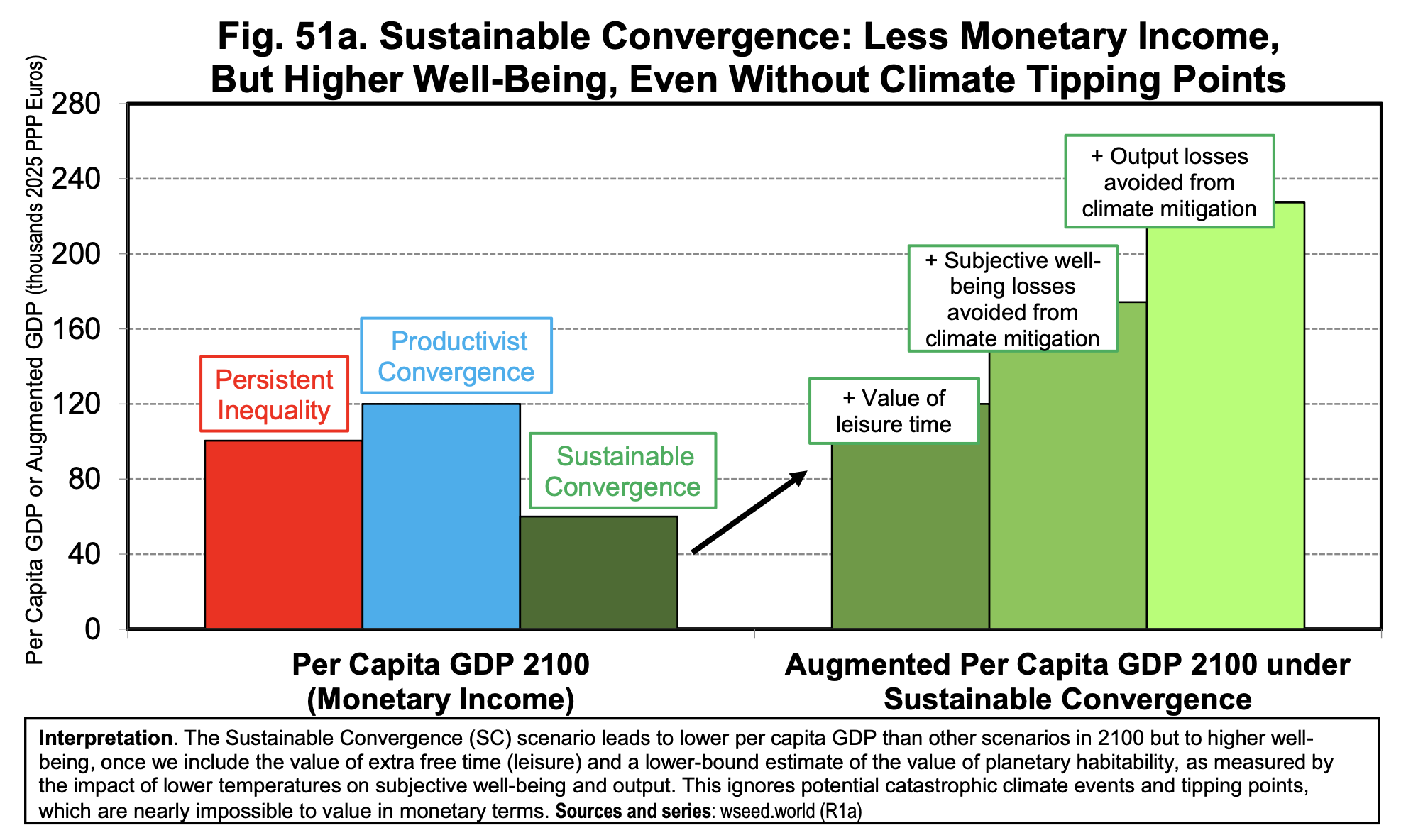
We analyze under what conditions global income convergence by 2100 is compatible with limiting temperature rise to below 2°C. To this end, we construct a new historical multi-sector global database (57 countries and regions, 1970–2025) and build an input-output projection model to 2100. Unlike standard climate-economy models, we examine sectoral reallocation toward immaterial sectors as a climate determinant, rather than treating it as a byproduct of development. In our benchmark scenario, all countries reach 60k euros (2025 PPP) in per capita GDP in 2100, close to today’s richest-country levels. We find that this is compatible with 2°C only under very strict conditions: sobriety across work hours, a consumption shift toward immaterial sectors, a major change in food habits, and a fast energy transition requiring massive low-carbon investment. The “Sustainable Convergence” scenario delivers higher comprehensive well-being (including valuations of time and planetary habitability) across all regions than “Productivist Convergence” or “Persistent Inequality” scenarios, both yielding a much larger global GDP but temperature rise beyond 4°C by 2100. Our main conclusion is that global between-country convergence within planetary boundaries requires major structural transformation and a decisive move toward sobriety: rapid energy transition alone will not suffice.
Downloads
Key Figures